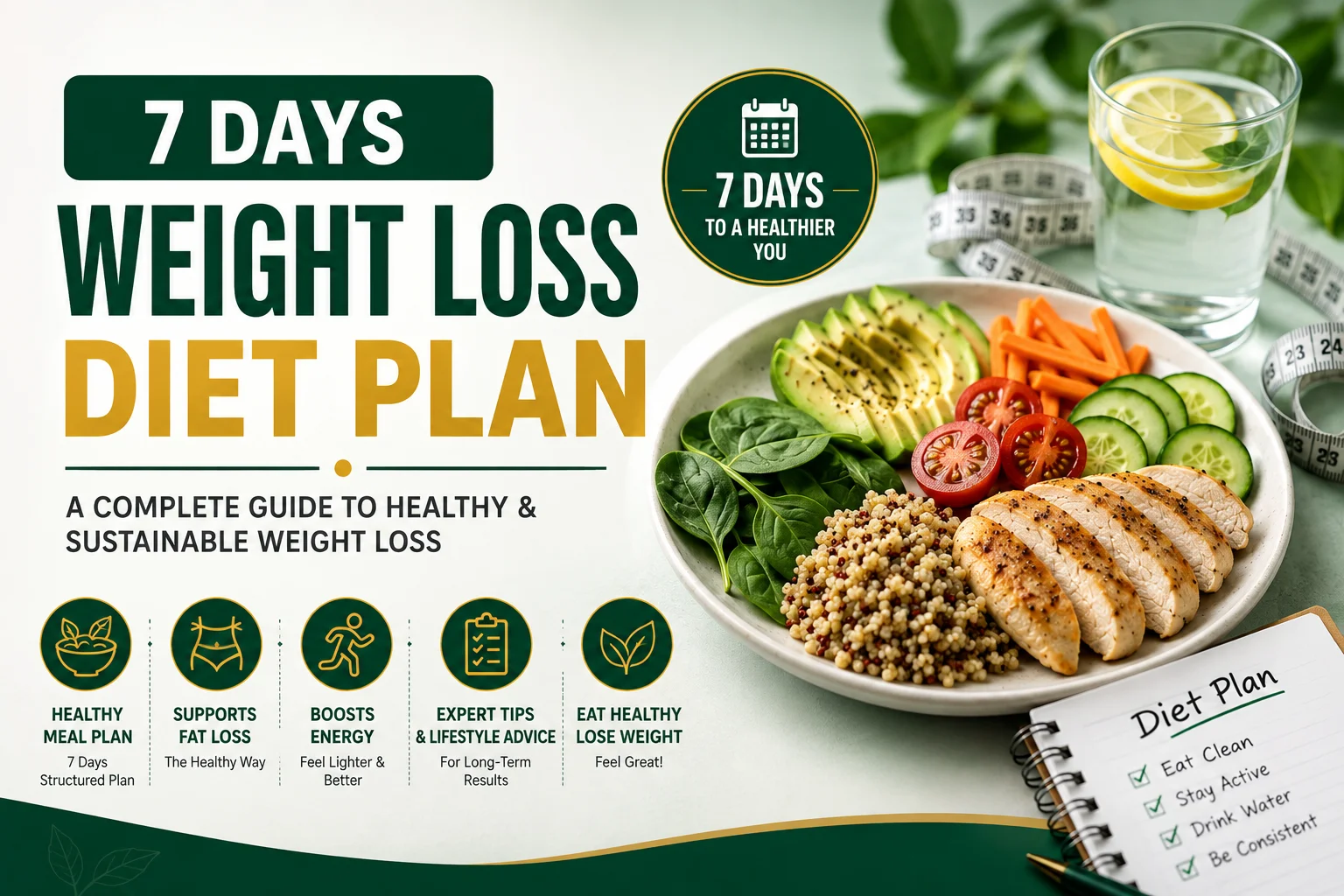
7 Days Weight Loss Diet Plan: A Complete Beginner’s Guide to Healthy and Sustainable Weight Loss
Searching for the best 7 Days Weight Loss Diet Plan is common among people who want quick results before an important event, after a holiday, or as the first step toward a healthier lifestyle. The internet is filled with countless diet plans promising dramatic transformations in just one week. Some claim you can lose several kilograms almost overnight, while others recommend skipping meals or following extremely restrictive diets. Although these approaches may sound appealing, many are difficult to maintain and often lead to disappointment. A well-designed 7 days weight loss diet plan should never focus on starving your body. Instead, it should help you build healthy eating habits, improve portion control, increase nutrient intake, and create a calorie deficit that supports gradual fat loss while preserving your overall health. Whether your goal is to feel lighter, improve your eating habits, or kick-start a long-term weight management journey, following a balanced weekly diet plan can be an excellent place to begin. In this comprehensive guide, you’ll learn: How healthy weight loss actually works What foods support fat loss Which foods to avoid A complete 7-day meal plan Expert-backed lifestyle tips Common mistakes that slow progress Frequently asked questions about weight loss By the end of this guide, you’ll have a practical plan that is realistic, balanced, and easy to follow. Why Most Weight Loss Diets Fail Many people begin their weight loss journey with enthusiasm but struggle to maintain progress after only a few days. This usually happens because the diet they choose is too restrictive or unrealistic. Here are some of the most common reasons why weight loss plans fail. 1. Expecting Instant Results Many people expect to see dramatic changes within a few days. While your body may lose some weight during the first week, a significant portion of this early change can be due to reduced water storage, especially if your carbohydrate or sodium intake decreases. Healthy fat loss is generally more gradual. Building sustainable habits is more effective than chasing rapid results. If you want to achieve faster results safely, check out our guide on fast weight loss. 2. Skipping Meals Skipping breakfast or lunch may seem like a simple way to reduce calories, but it often leads to excessive hunger later in the day. This can increase cravings and make overeating more likely. Regular, balanced meals help maintain energy levels and improve appetite control. 3. Following Extremely Low-Calorie Diets Very restrictive diets may reduce calorie intake sharply, but they are difficult to maintain. They can also make it harder to get enough protein, fiber, vitamins, and minerals. Instead of following crash diets, focus on eating nutritious foods in appropriate portions. Discover what actually works without starving yourself. 4. Drinking Sugary Beverages Soft drinks, sweetened coffee, flavored milk, energy drinks, and packaged juices can contribute a significant amount of added sugar and calories without providing lasting fullness. Replacing sugary drinks with water or unsweetened beverages is one of the simplest ways to reduce daily calorie intake. 5. Not Eating Enough Protein Protein plays an important role during weight loss. It helps you feel fuller after meals and supports the maintenance of muscle while you’re losing weight. Good protein choices include: Eggs Chicken breast Fish Greek yogurt Cottage cheese Lentils Chickpeas Beans Tofu Aim to include a source of protein with each main meal. You can learn more about high-protein sources from the Harvard T.H. Chan School of Public Health. 6. Ignoring Physical Activity Diet is a key part of weight management, but regular movement also contributes to overall health. Walking, cycling, resistance exercises, swimming, or other enjoyable activities can complement healthy eating habits. You don’t need intense workouts every day. Consistency matters more than perfection. 7. Sleeping Too Little Poor sleep can affect hunger-regulating hormones, making it harder to manage appetite and food choices. Read more about the connection between sleep and weight loss on Sleep Foundation. Adults generally benefit from getting around 7–9 hours of quality sleep each night. Can You Really Lose Weight in 7 Days? One of the most common questions people ask is: “Can I lose weight in just seven days?” The answer depends on several factors, including: Your starting weight Current eating habits Physical activity level Sleep quality Hydration Medical conditions Medications Individual metabolism Some people notice a drop on the scale during the first week because of changes in water balance and digestion, especially after reducing processed foods and increasing whole foods. You can also calculate your current baseline with our free BMI calculator. However, meaningful and sustainable fat loss usually takes longer than one week. Think of a 7-day diet plan as the beginning of a healthier lifestyle rather than a short-term solution. The greatest success comes from continuing healthy habits beyond the first week. How This 7 Days Weight Loss Diet Plan Works Unlike restrictive fad diets, this plan focuses on creating habits that support both weight management and overall well-being. The plan emphasizes: Balanced Meals: Each meal combines lean protein, fiber-rich vegetables, healthy fats, and complex carbohydrates to help you stay satisfied. Portion Awareness: Eating appropriate portions can help reduce excess calorie intake without eliminating entire food groups. Protein at Every Meal: Including protein throughout the day supports fullness and helps maintain lean muscle during weight loss. High-Fiber Foods: Vegetables, fruits, legumes, and whole grains provide fiber, which promotes satiety and supports digestive health. Learn more about dietary fiber on Mayo Clinic. Healthy Hydration: Water is essential for overall health and can help replace high-calorie beverages. Reduced Processed Foods: Limiting highly processed snacks, sugary drinks, and desserts can reduce excess calories and added sugars. Lifestyle Support: Regular movement, quality sleep, and stress management all contribute to long-term success. Explore our complete range of health and nutrition services for holistic guidance. Benefits of Following a Healthy Weight Loss Diet A structured weekly diet plan offers benefits beyond the number on the scale. Many people notice improvements such as: Better energy throughout the day Reduced cravings Improved digestion