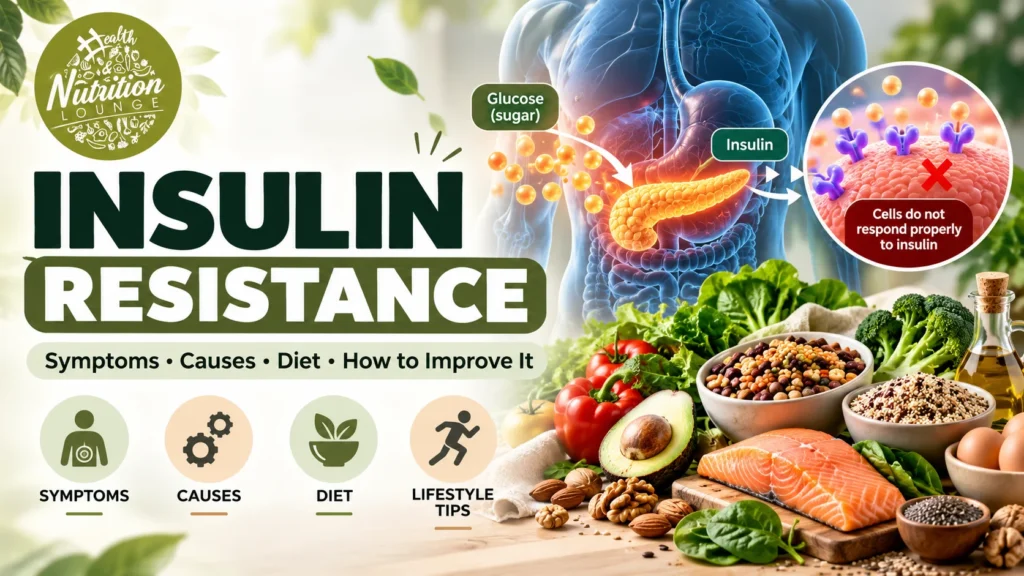
Insulin resistance can develop quietly for years. Learn what it means, the common risk factors and signs, what to eat, what to limit, and which lifestyle changes can support better blood sugar control.
What is insulin resistance?
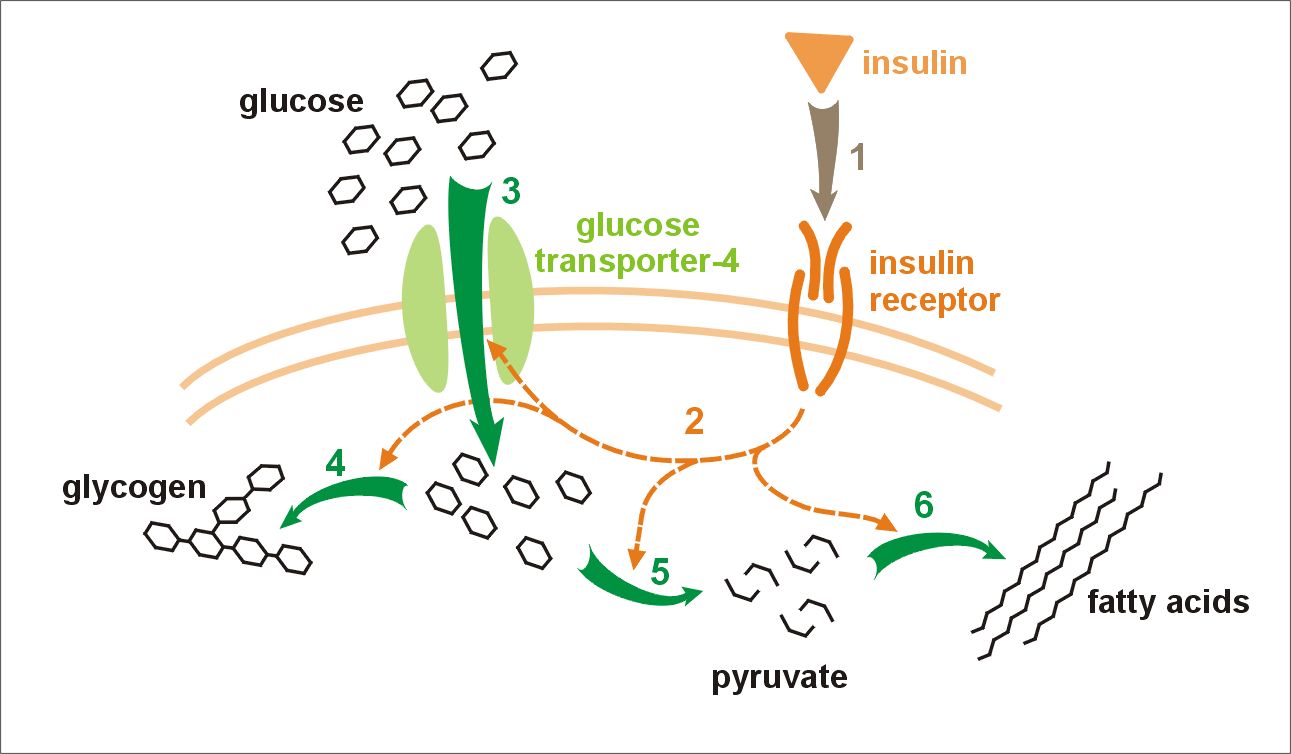
Insulin resistance means that cells in the body do not respond normally to insulin. Insulin helps glucose move from the blood into cells where it can be used for energy. When the body becomes less responsive to insulin, the pancreas may produce more insulin to maintain normal blood glucose. Over time, blood glucose can rise and may progress to prediabetes and, in some people, type 2 diabetes.
Insulin resistance is closely linked with prediabetes, type 2 diabetes, excess weight and other metabolic health problems. The challenge is that insulin resistance often does not cause obvious symptoms in its early stages, so a person may have it without realizing it.
The good news is that many risk factors are modifiable. A balanced eating pattern, regular physical activity, healthy weight management, adequate sleep and appropriate medical follow-up can all play a role in improving metabolic health.
For more information, see the NIDDK guide on insulin resistance and prediabetes .
Insulin Resistance Symptoms & Signs
One of the most important things to understand is that insulin resistance may be silent. Some people have no noticeable symptoms, particularly in the earlier stages.
When metabolic problems become more pronounced, a person may experience signs associated with abnormal blood glucose or insulin resistance, including:
Acanthosis nigricans
Dark, thicker-looking skin, commonly around the neck or skin folds.
Skin tags
Multiple skin tags can sometimes occur alongside insulin resistance.
Increased hunger or cravings
Some people report frequent hunger or cravings, although these are not specific to insulin resistance.
Fatigue
Persistent tiredness can have many causes and should not be assumed to mean insulin resistance.
If you have risk factors for prediabetes or diabetes, laboratory testing is more useful than trying to diagnose insulin resistance from symptoms alone.
Causes & Risk Factors for Insulin Resistance
There is no single cause of insulin resistance. It develops through a combination of genetic, metabolic and lifestyle factors.
- Overweight or obesity, particularly excess abdominal fat
- Physical inactivity
- Family history of diabetes
- Increasing age
- Polycystic ovary syndrome (PCOS)
- History of gestational diabetes
- Sleep-related and other metabolic conditions
- Smoking and some medications
Insulin Resistance Diet: What Should You Eat?
There is no single “insulin resistance diet” that works for everyone. A practical approach is to focus on overall food quality, fiber, adequate protein, appropriate portions and minimally processed foods.
The American Diabetes Association’s 2026 guidance emphasizes eating patterns that include non-starchy vegetables, whole fruits, legumes, lean proteins, whole grains, nuts and seeds while limiting sugar-sweetened beverages, sweets, refined grains and highly processed foods.
View the American Diabetes Association Standards of Care 2026
A simple blood-sugar-friendly plate
Non-starchy vegetables
Salad, spinach, cucumber, broccoli, cauliflower and other vegetables
Protein
Eggs, fish, chicken, lean meat, beans or lentils
High-fiber carbohydrate
Oats, whole grains, beans, lentils or appropriately portioned rice
Best Foods for Insulin Resistance
Instead of looking for one “magic” food, build meals around a variety of nutrient-dense foods.

| Choose more often | Limit more often |
|---|---|
| Vegetables and salads | Sugar-sweetened drinks |
| Beans and lentils | Sweets and sugary desserts |
| Fish, eggs and lean protein | Refined grains and highly processed snacks |
| Whole grains in appropriate portions | Deep-fried and highly processed foods |
| Nuts, seeds and healthy fats | Frequent large portions of calorie-dense foods |
What about fruit?
Whole fruit can be part of a healthy eating pattern. You generally do not need to eliminate fruit simply because you are concerned about insulin resistance. Whole fruit provides fiber and nutrients; portion size and the overall meal pattern matter.
What about rice and roti?
People in Pakistan often ask whether rice or roti must be completely eliminated. In most cases, the more practical approach is to consider portion size, food quality, fiber, protein and the overall meal rather than labeling one carbohydrate as universally “bad.”
For more background on carbohydrate quality, glycemic index and blood sugar: Harvard T.H. Chan School of Public Health .
How to Improve Insulin Resistance Naturally
The goal is not a short-term “detox.” Sustainable lifestyle changes are more useful for long-term metabolic health.
1. Be physically active
Regular physical activity can improve glucose regulation and overall metabolic health.
2. Manage excess weight
For people with overweight or obesity and high diabetes risk, even modest weight loss can provide meaningful health benefits.
3. Improve food quality
Increase vegetables, legumes, whole foods, protein and fiber while reducing sugary drinks and highly processed foods.
4. Prioritize sleep
Adequate sleep is part of healthy metabolic and lifestyle management.
The CDC’s National Diabetes Prevention Program also describes lifestyle intervention using modest weight loss and at least 150 minutes of physical activity per week as evidence-based strategies for reducing type 2 diabetes risk. Learn more from CDC .
How Is Insulin Resistance Diagnosed?
There is no single symptom that confirms insulin resistance. If you have risk factors or concerns about prediabetes or diabetes, speak with a healthcare professional about appropriate blood glucose testing.
Tests used to assess prediabetes and diabetes include A1C, fasting plasma glucose and a 2-hour oral glucose tolerance test. The appropriate test depends on the individual clinical situation.
Insulin Resistance and PCOS
Polycystic ovary syndrome (PCOS) is one of the conditions associated with increased risk of insulin resistance. For people with PCOS, nutrition, physical activity and weight management may form part of a broader individualized treatment plan.
If you have PCOS along with weight concerns, irregular periods, abnormal glucose results or other metabolic risk factors, discuss an individualized plan with your healthcare team rather than following a restrictive diet found online.
Frequently Asked Questions
What are the most common symptoms of insulin resistance?
Insulin resistance often has no obvious symptoms. Some people may have associated signs such as acanthosis nigricans or skin tags, while symptoms such as fatigue or increased hunger are not specific enough to diagnose insulin resistance.
Can insulin resistance be improved?
Yes. Healthy eating, regular physical activity, weight management and appropriate medical care can help improve metabolic health and may prevent or delay progression to type 2 diabetes in people at risk.
What foods are good for insulin resistance?
Focus on vegetables, legumes, whole fruits, whole grains in suitable portions, lean protein, nuts and seeds. Reduce sugar-sweetened drinks, sweets, refined grains and highly processed foods.
Can insulin resistance cause weight gain?
Insulin resistance is associated with overweight and obesity, but weight gain is influenced by many factors. It should not automatically be assumed that insulin resistance is the sole cause of weight gain.
Is insulin resistance the same as diabetes?
No. Insulin resistance can contribute to rising blood glucose and prediabetes, which can progress to type 2 diabetes in some people. They are related but not the same diagnosis.
Should I completely stop eating carbohydrates?
Not necessarily. The quality and amount of carbohydrate, along with fiber, protein and the overall eating pattern, are important. A personalized plan is more appropriate than completely eliminating carbohydrates for everyone.
Need a Personalized Insulin Resistance Diet Plan?
If you have insulin resistance, prediabetes, PCOS, excess weight or concerns about blood sugar, an individualized nutrition plan can help you turn general advice into practical meals and sustainable habits.