Achieving sustainable weight loss requires a well-structured dietary approach rather than extreme starvation. This complete guide outlines the best meal plan for weight loss in Pakistan, designed to help you shed unwanted kilograms while keeping you energized with delicious, nutrient-dense, and satisfying local foods.
Making healthier choices can be both fulfilling and enjoyable. Here are proven methods to modify traditional Pakistani recipes to make them weight-loss friendly without losing their authentic taste:
Smart Dietary Modifications for Weight Loss
1. Switch to Complex Carbohydrates
Replacing refined carbs like white rice and white flour (maida) with whole grains improves meal quality significantly. Use brown rice, whole wheat flour (chaki atta), or oats. High-fiber foods improve digestion, keep blood sugar stable, and promote long-lasting fullness.
2. Reduce Excessive Oil and Ghee
Traditional cooking uses large amounts of oil and banaspati ghee. Reduce overall oil consumption and opt for healthy fats like extra virgin olive oil or mustard oil in minimal quantities. Use non-stick cookware and modern cooking methods like baking, steaming, or air-frying for dishes like chicken karahi and biryani.
3. Increase Fiber with Seasonal Vegetables
Adding colorful, non-starchy vegetables to your curries increases fiber and micronutrient density. Incorporating spinach (palak), okra (bhindi), cauliflower, and cucumbers helps fill your plate with low-calorie options that keep hunger cravings at bay.
4. Prioritize Lean Protein Sources
Protein boosts metabolism and preserves lean muscle mass during weight loss. Choose skinless chicken breast, fish, eggs, and legumes like lentils (daal) or chickpeas (chana) over high-fat red meat cuts.
5. Utilize Thermogenic Spices
Pakistani spices like turmeric (haldi), cumin (zeera), black pepper, and ginger (adrak) provide potent anti-inflammatory benefits and aid digestion. Adding turmeric to lentil soups or warm tea enhances both flavor and metabolic rate.
6. Adopt Healthy Cooking Techniques
Baking or air-frying traditional snacks like samosas and pakoras reduces unnecessary calories from deep frying. Using chickpea flour (besan) in air-fried snacks offers high fiber and protein with minimal fat.

7. Master Portion Control
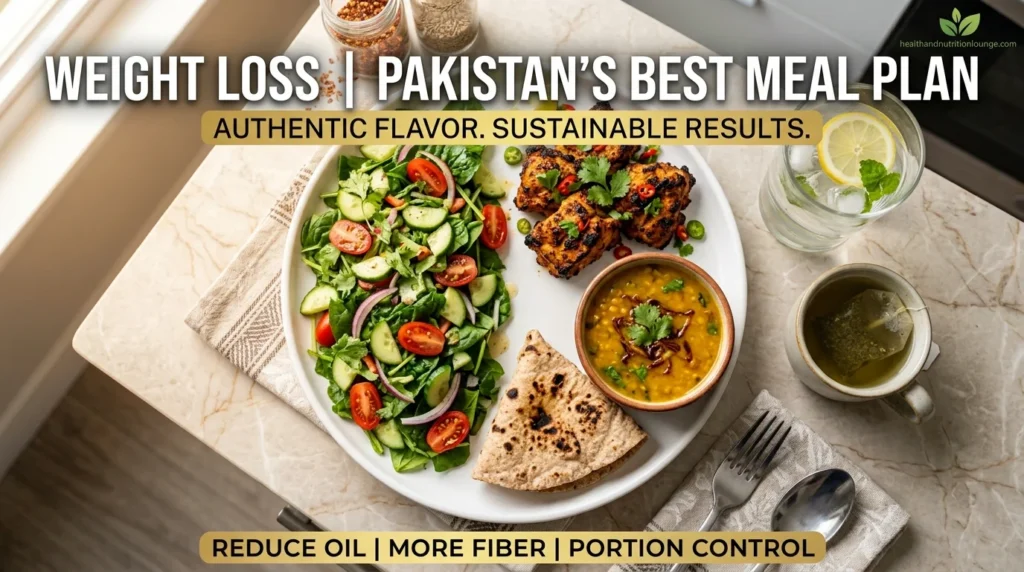
Practice plate division: fill half your plate with fresh salad and vegetables, one-quarter with lean protein, and one-quarter with complex carbs (like a small whole wheat roti or brown rice). For custom dietary strategies, check out our personalized nutrition plans.
Sample Daily Weight Loss Diet Chart for Pakistan
Frequently Asked Questions (FAQs)
1. What is the best meal plan for weight loss in Pakistan?
The best diet plan balances local whole foods: whole wheat roti (chaki atta), lean protein (chicken/fish/daal), healthy fats in moderation, and high-fiber vegetables while eliminating refined sugar and excess ghee.
2. How much weight can I lose in a month with a Pakistani diet chart?
A safe, realistic goal is 3 to 5 kilograms per month through a sustained calorie deficit, balanced nutrition, and daily physical activity.
3. Can I eat roti or rice while losing weight?
Yes. You do not need to give up carbohydrates entirely. Prefer whole wheat bran roti or brown rice in controlled portions paired with protein and salads.
4. Is green tea effective for weight loss?
Green tea contains antioxidants like EGCG that help boost metabolic rate, but it works best when combined with a controlled calorie diet and regular exercise.
Conclusion
Sustainable weight loss requires a personalized strategy tailored to your lifestyle and metabolism. For one-on-one nutrition consultations, customized meal plans, and professional fitness advice, visit Health and Nutrition Lounge and start your weight loss transformation today.